· Announcements · 3 min read
Introducing Pitinf Models
Pitinf is a new family of point-in-time large language models built for quantitative finance, designed to eliminate look-ahead bias and deliver realistic backtest and live-trading performance.
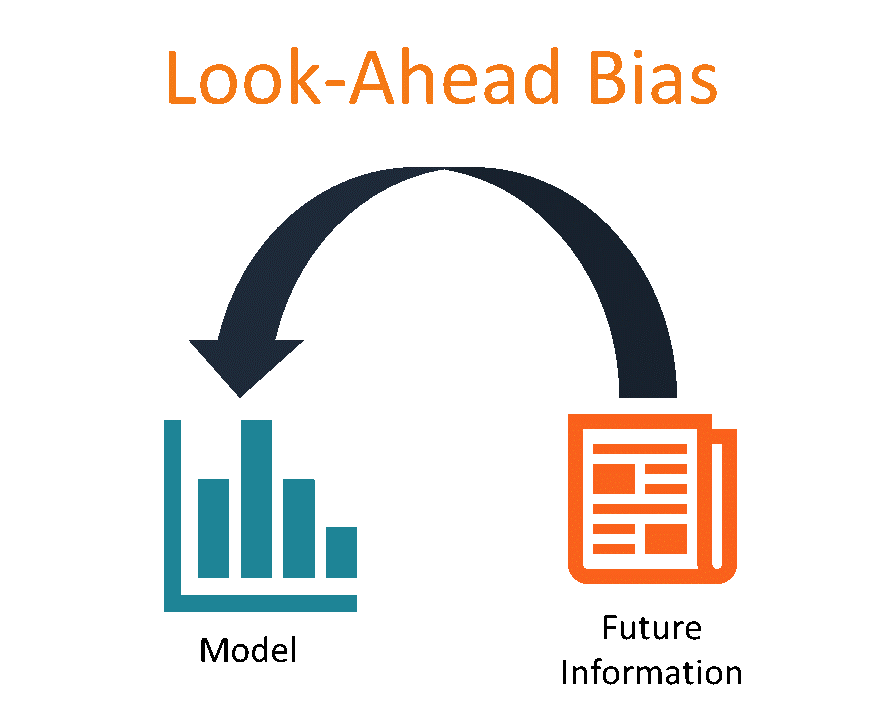
The Look-Ahead Bias Problem
Large Language Models are increasingly used by quants for research, signal generation, and portfolio construction. However, most general-purpose LLMs suffer from a critical flaw in financial settings: look-ahead bias.
Because they are trained on web-scale corpora that include post-hoc market commentary, earnings reports, and retrospective analyses, standard LLMs often implicitly know the future. This leads to artificially inflated backtest results that collapse once the model is deployed on genuinely unseen data.
In finance, this problem is especially severe. Temporal causality matters. A model that “knows” NVIDIA surged in 2023 is not predicting — it is recalling. As a result, impressive historical performance often evaporates the moment the evaluation window moves past the model’s training cutoff.
Pitinf: Point-in-Time LLMs for Finance
Pitinf models are purpose-built to solve this problem.
Pitinf is a family of Point-in-Time (PiT) Large Language Models, trained and aligned to strictly respect temporal cutoffs. Each model only has access to information that would have been available at a specific point in time, eliminating future data leakage by design.
This makes Pitinf models fundamentally different from standard foundation models:
- No memorized future prices or events
- No hidden contamination from post-cutoff data
- No inflated backtests that fail in live conditions
The Pitinf family is available in three sizes to match different production needs:
- Pitinf-Small (~10B parameters): low-latency inference for real-time workflows
- Pitinf-Medium (~100B parameters): strong reasoning for research and systematic strategies
- Pitinf-Large (~500B+ parameters): frontier-grade reasoning for complex, multi-agent trading systems
Proven Performance Without Alpha Decay
To evaluate temporal robustness, we introduced Look-Ahead-Bench, a standardized benchmark that measures how model performance changes between in-sample and out-of-sample periods using alpha decay.
The results reveal a clear pattern:
- Standard LLMs achieve high in-sample returns but suffer severe performance collapse when moved to post-cutoff periods.
- Pitinf models maintain stable performance across market regimes, showing little to no alpha decay.
This leads to what we call the Scaling Paradox:
- For standard LLMs, larger models perform worse out of sample due to stronger memorized priors.
- For Pitinf models, scaling improves performance, because additional capacity enhances reasoning rather than memorization.
In practice, this means Pitinf-Large behaves like a true reasoning engine — not a historical lookup table.
Built for Real-World Deployment
Pitinf models are designed for quants who care about deployable performance, not leaderboard metrics. They integrate naturally into agentic trading systems, research pipelines, and backtesting frameworks where temporal integrity is non-negotiable.
If you are building trading agents, running systematic strategies, or evaluating LLMs for financial decision-making, Pitinf models give you something rare: results you can trust out of sample.
👉 Learn more and get access at PiT-Inference.